
Understanding the Art and Science of Dyeing Sola Wood Flowers


Sola Wood flowers are prized for their natural beauty and their unique ability to act as perfume diffusers. A common question we receive is, "Why doesn't my flower's color perfectly match the photo?" This article will demystify our dyeing process, explain the different methods available, and clarify why the natural variations you see are a direct result of our commitment to the flower's primary function: diffusing your favorite fragrances.
1. The Two Main Approaches to Dyeing Sola Wood
There are two main categories for dyeing Sola Wood flowers. The choice between them depends entirely on the flower's intended purpose.
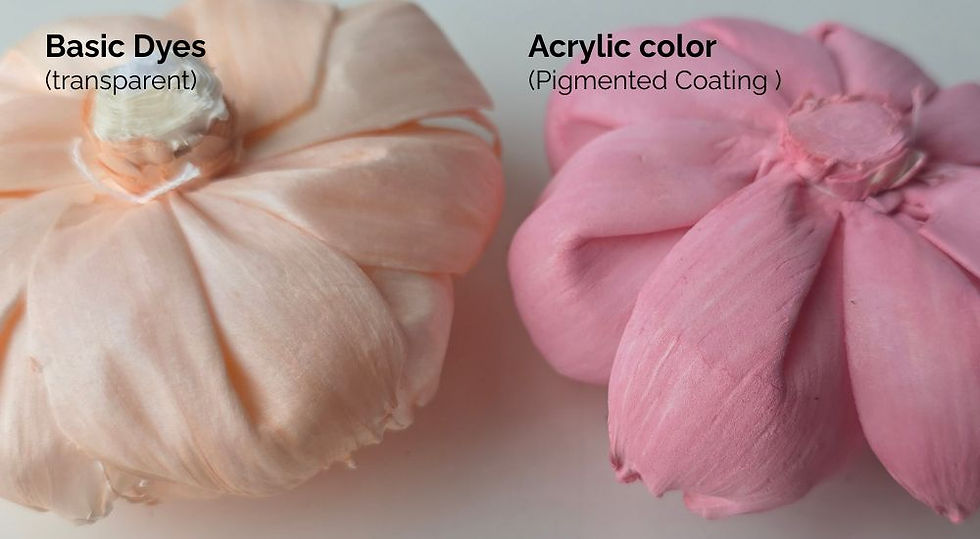
Transparent Dyeing: A method that penetrates and stains the wood fibers, preserving the wood's natural texture and pores.
Opaque Dyeing: A method that coats the wood's surface with a film of pigment, covering the texture.
2. Our Method of Choice: Transparent Basic Dyes
For Sola Wood flowers intended for perfume diffusion, we exclusively use the transparent dyeing method. The dyes used in this process are also known as "Basic Dyes."
2.1. Why We Use Transparent Dyes
The core reason for this choice is function. You primarily use our Sola Wood flowers to absorb and diffuse perfume. To do this effectively, the natural pores of the wood must remain completely open and unclogged. Transparent dyes work by penetrating and staining the wood fibers themselves without creating a surface layer. This ensures the flower remains porous and can absorb and release fragrance as intended.
2.2. The Advantages
Preserves Natural Texture: This method allows the beautiful, natural texture of the Sola Wood to remain visible, enhancing the flower's organic appeal.
2.3. The Challenges and Natural Variations
We understand that receiving a flower with slight color variations can be surprising, especially when you have a specific reference in mind. To be fully transparent, achieving perfect color consistency with this method is impossible due to the natural properties of the wood. Here are the specific, uncontrollable factors we contend with in every batch that cause these variations:
Inconsistent Absorption: Each sheet of Sola Wood has a unique structure with harder and softer parts. This natural variation causes the dye to be absorbed unevenly across the flower. Some spots may absorb more color, while others may not absorb any at all.
Batch-to-Batch Variation: Even when dyeing flowers in the same batch, the color can vary. The first pieces dyed can have a noticeably different shade from the last pieces as the dye concentration changes.
Wet vs. Dry Color: The color of the dye when the flower is wet is different from its final appearance once completely dry. This is another variable that is difficult to control with perfect precision.
Resulting Waste: These uncontrollable natural factors can lead to a significant amount of waste during our production process, as some flowers do not meet color quality standards.
3. The Alternative Method: Opaque Dyes
The second method involves using opaque dyes, with acrylic paints used for art being a primary example.
3.1. How They Work
Unlike transparent dyes that soak into the wood, opaque colors work by coating the flower’s surface with a solid film of pigment, effectively sealing it.
3.2. Why They Are Unsuitable for Perfume Diffusion
This coating clogs the natural pores of the Sola Wood, which makes the flowers unsuitable for absorbing and diffusing perfume. If perfume is absorbed, it can cause the pigment film to shift or move, ruining the flower's appearance.
3.3. Suitable Applications
Flowers colored with opaque dyes are ideal for applications where fragrance diffusion is not the goal. These include:
Flower bouquets
General home decoration
Any project where preserving the Sola Wood texture is not a priority.
4. A Note on Natural Dyes
In our pursuit of the best materials, we thoroughly tested natural dyes. However, the results were not successful. Natural dyes do not adhere to Sola Wood as effectively as our chemical-based Basic Dyes. Because of this technical limitation, our dyed Sola Wood flowers cannot be considered 100% organic.
5. An Important Effect When Using with Perfume: Color Separation
An interesting effect can occur when using transparent-dyed flowers made with mixed colors. When the flower absorbs the perfume base, the component colors that were mixed to create the final dye can separate.
Example: A purple flower might begin to show streaks of its component blue and red colors as it diffuses the fragrance.


Comments